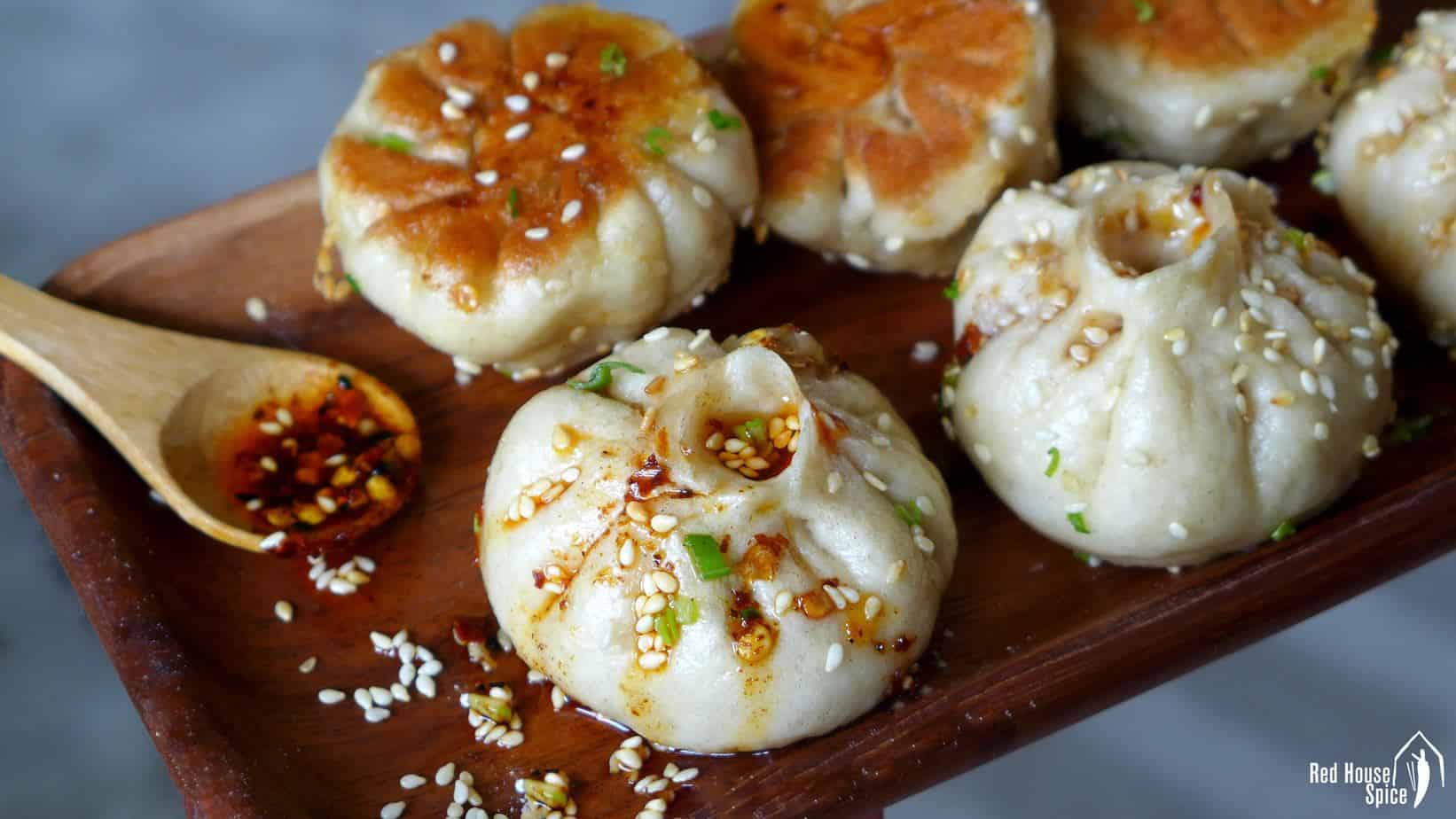
Shengjianbao, or 'living bun,' represents one of Shanghai's most beloved street food treasures. These golden pan-fried buns showcase a perfect marriage of textures: the crispy, caramelized bottom yields to pillowy, slightly chewy dough that cradles a burst of hot, savory soup when bitten. The ground pork filling, seasoned with soy sauce, ginger juice, and pork aspic, delivers umami-rich flavor that's both comforting and sophisticated. Each bun is finished with a delicate sprinkle of toasted sesame seeds and fresh scallion greens, adding aromatic complexity. Traditionally served hot in small portions, these buns are often enjoyed as a breakfast item or late-night snack, reflecting Shanghai's vibrant food culture where street vendors and traditional restaurants alike celebrate this iconic dish. The communal experience of sharing these buns, often accompanied by a cup of green tea or soy milk, embodies the city's approachable, convivial dining philosophy.
Nutrition & Info
Allergen Warnings
Equipment Needed
Instructions
-
1
Make dough with flour, yeast, and water, let rise for one hour.
-
2
Mix pork with soy sauce, ginger juice, and chopped aspic for filling.
-
3
Divide dough, roll wrappers, fill and pleat shut.
-
4
Place buns in an oiled pan, fry until bottoms are golden.
-
5
Add water, cover, and steam-fry until cooked through, top with sesame and scallions.
Did You Know?
The 'living' in shengjianbao literally means 'alive' in Chinese, referring to the bun's ability to 'come alive' with hot soup when consumed, as the pork aspic inside melts and creates a burst of flavor that makes each bite a dynamic sensory experience.
Chef's Notes
Equipment Tips
- flat pan with lid
The Story Behind 生煎包 (Sheng Jian Bao)
Originating in the 1930s in Shanghai's bustling commercial districts, shengjianbao evolved from traditional Chinese steamed buns (baozi) adapted for the city's fast-paced lifestyle. The dish gained prominence during the Republican era when street vendors sought to create portable, satisfying meals for workers. The pan-frying technique was developed to enhance the buns' texture and create the signature crispy bottom while maintaining the soft, steamed top. This innovation transformed a simple street food into a symbol of Shanghai's culinary identity, representing the city's ability to adapt traditional techniques to modern consumption patterns.

Comments (0)
Log in to leave a comment.
No comments yet. Be the first to share your thoughts!