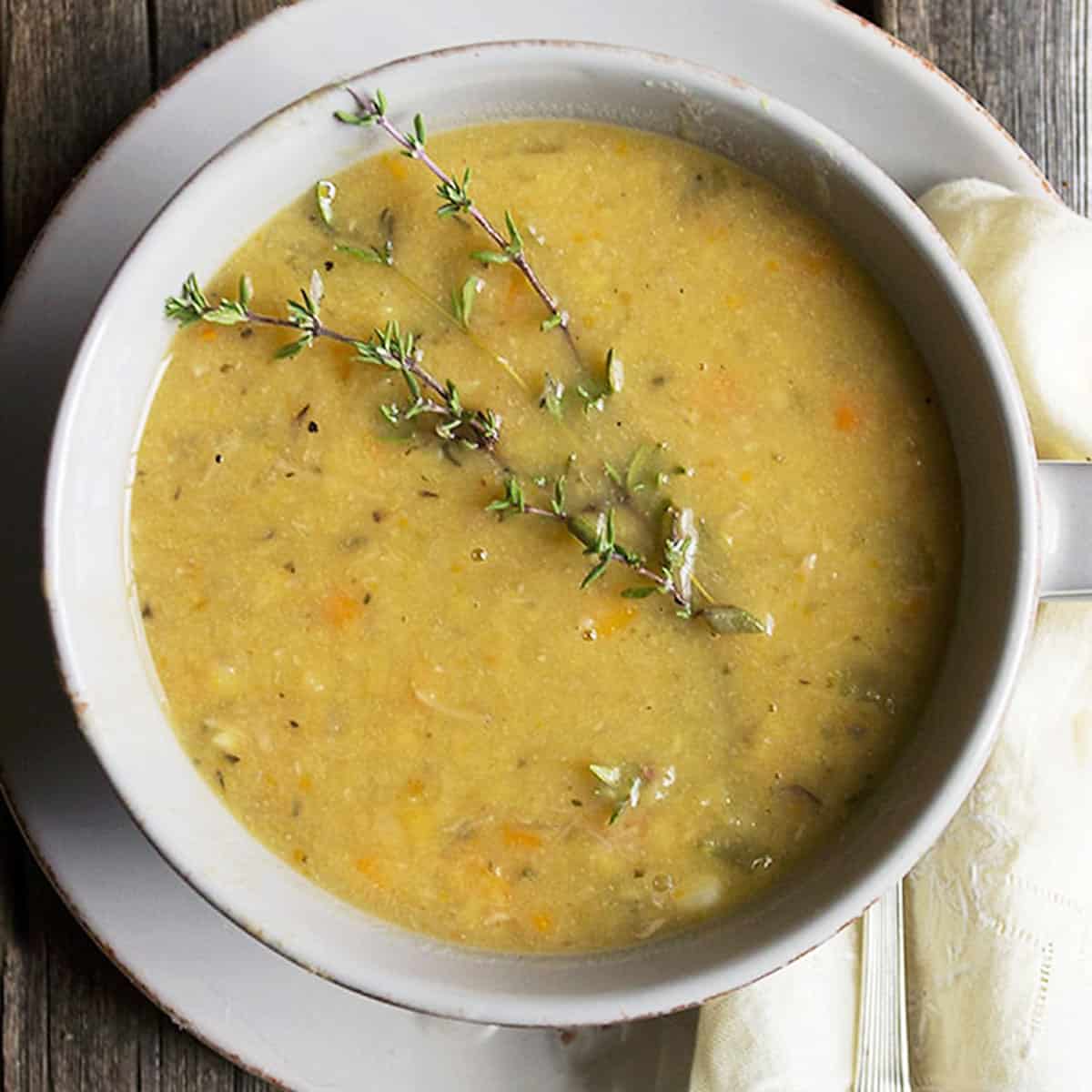
Split Pea Soup
Split pea soup embodies the soul of Quebec's rustic culinary heritage, a golden-brown broth that whispers tales of early French settlers who transformed simple ingredients into sustenance. This hearty soup boasts a velvety texture with tender peas that dissolve into creamy comfort, while diced carrots and celery add earthy sweetness and satisfying bite. The aromatic blend of thyme, savory, and bay leaves creates an intoxicating fragrance that fills kitchens during cold winter months. Traditionally served as a warming first course or hearty lunch, it's often accompanied by crusty rye bread and a dollop of sour cream. This dish represents the Canadian philosophy of making the most of what's available, transforming humble split peas into a nourishing symbol of resilience and community.
Nutrition & Info
Instructions
-
1
Melt the butter in a large soup pot over medium heat and sauté the onion, carrots, celery, and garlic for 5 minutes until the vegetables are softened and beginning to color.
-
2
Add the rinsed split peas, chicken broth, bay leaves, thyme, and savory, stirring well, then bring to a boil over high heat.
-
3
Reduce heat to low, cover partially, and simmer for 1 to 1.5 hours, stirring occasionally, until the peas have completely broken down and the soup is thick and creamy.
-
4
Remove the bay leaves, season generously with salt and pepper, and use an immersion blender to partially blend for a creamier texture while keeping some chunks.
-
5
Serve hot in deep bowls with crusty bread or croutons on top, and a drizzle of good olive oil for a traditional Québécois comfort meal.
Did You Know?
The traditional Quebecois version often includes a small amount of maple syrup or maple flavoring, a distinctly Canadian twist that reflects the province's indigenous influence and the early adoption of maple products in local cooking, making it one of the few soups in the world with a touch of sweetness from the sugar maple.
The Story Behind Split Pea Soup
Split pea soup emerged in Quebec during the 17th century as a practical solution for settlers who needed filling, nutritious meals from limited ingredients. The dish evolved from French pea soup traditions brought by early colonists, adapting to local availability of split peas and root vegetables. It became a cornerstone of Quebecois cuisine, particularly during harsh winters when families would gather around the soup pot for warmth and sustenance.



Comments (0)
Log in to leave a comment.
No comments yet. Be the first to share your thoughts!