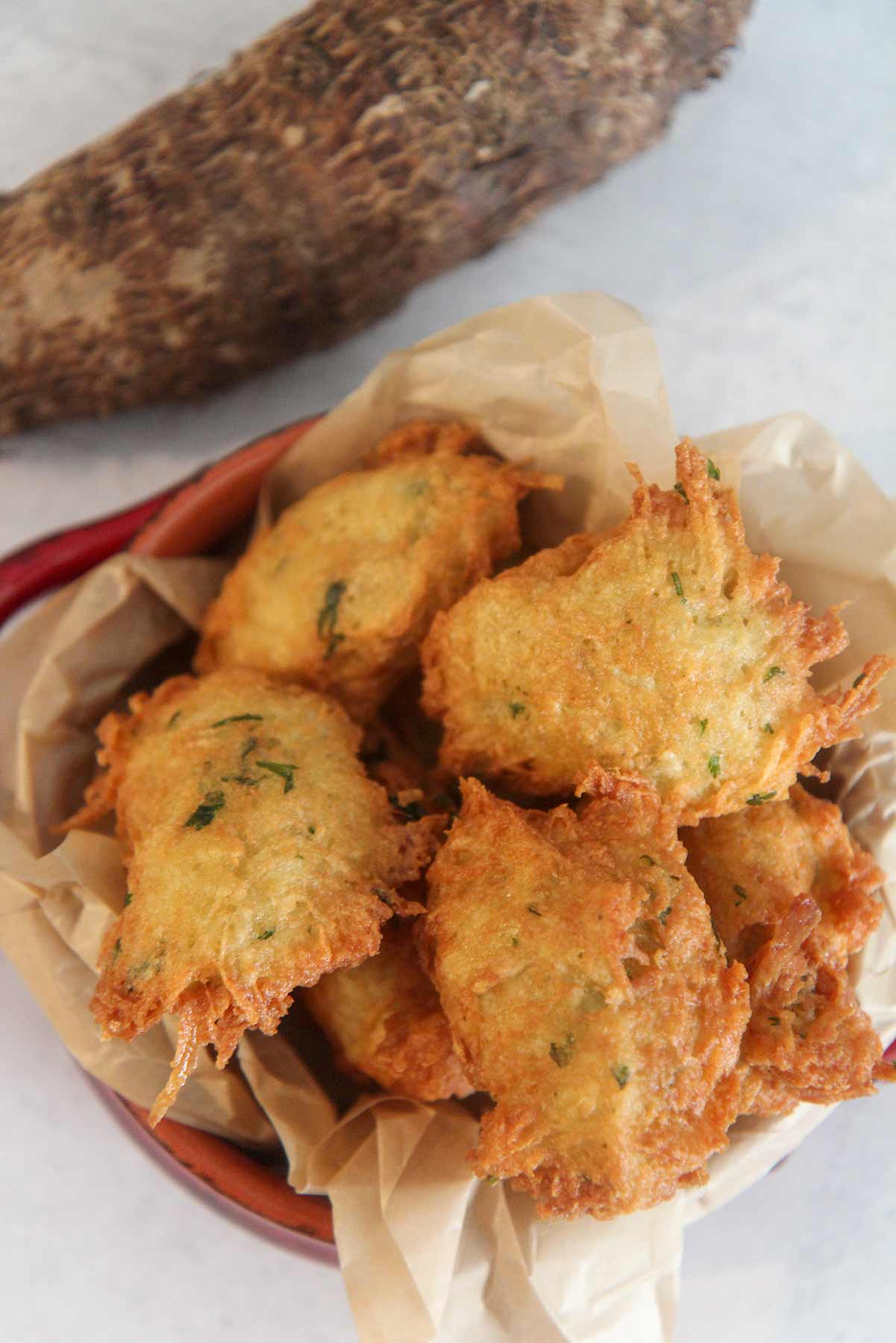
Frituras de Malanga
Frituras de Malanga represents the heart of Cuban street food culture, where creamy, starchy malanga transforms into addictive golden fritters that capture the essence of island life. These crispy appetizers showcase malanga's natural sweetness while the garlic and parsley create a bright, aromatic contrast that dances on the palate. Each fritter boasts a delicate golden crust that gives way to a pillowy interior, delivering a satisfying textural journey. Traditionally served at casual gatherings, street markets, and family meals, these fritters embody Cuba's resourceful culinary spirit, turning humble root vegetables into beloved comfort food. The dish reflects the African, Spanish, and indigenous influences that shaped Cuban cuisine, with malanga serving as a cornerstone ingredient that connects modern Cubans to their ancestral roots through shared flavors and memories.
Nutrition & Info
Instructions
-
1
Peel the malanga and grate it finely using a box grater or food processor, placing the grated root in a large bowl with any liquid that comes out.
-
2
Add the beaten eggs, minced garlic, chopped parsley, salt, and pepper to the grated malanga, mixing thoroughly until you have a thick, cohesive batter.
-
3
Heat vegetable oil in a deep skillet to 350°F (175°C), ensuring there is at least 2 inches of oil for proper frying and even browning.
-
4
Drop heaping tablespoons of the malanga batter into the hot oil, flattening them slightly with the spoon, and fry for 3 to 4 minutes per side until deep golden brown and crispy.
-
5
Remove with a slotted spoon, drain on paper towels, and serve immediately while they are still hot and crunchy, with a squeeze of lime juice on top.
Did You Know?
The word 'malanga' comes from the Taíno indigenous language and literally means 'root that grows in water,' reflecting how this tuber was originally cultivated in wetland conditions before being adapted to Cuban agricultural practices.
The Story Behind Frituras de Malanga
Frituras de Malanga traces its origins to the colonial period when enslaved Africans brought taro cultivation to Cuba, adapting traditional cooking methods to local ingredients. The dish evolved from simple fried malanga preparations into the beloved street food we know today, representing the fusion of African cooking techniques with Spanish culinary traditions. This fritter became a symbol of Cuban resilience and resourcefulness, showcasing how indigenous ingredients were transformed into celebrated comfort food that defines Cuban identity.
Comments (0)
Log in to leave a comment.
No comments yet. Be the first to share your thoughts!