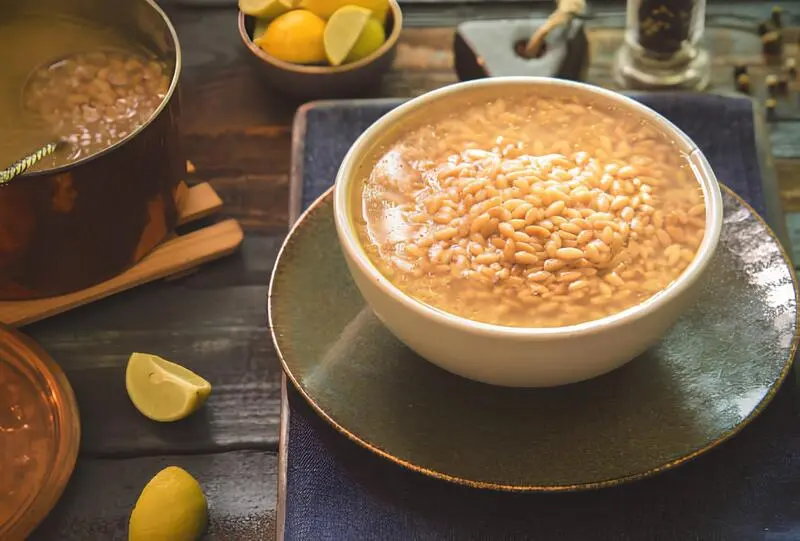
Bird tongue pasta soup, or 'shorbat lisan asfour,' embodies the soul of Egyptian comfort food with its delicate orzo pasta that mimics tiny bird tongues, creating a visual metaphor for the country's rich culinary storytelling. This warming broth showcases the aromatic complexity of Egyptian spices—cumin, turmeric, and cinnamon—infusing the chicken stock with deep, earthy flavors that dance on the palate. The soup presents as a golden, velvety liquid with tender pasta pieces floating like tiny whispers of tradition. Traditionally served as an opening course during Ramadan iftar meals or as a nourishing breakfast in winter months, it represents Egypt's hospitality and the importance of communal dining. The bright green parsley garnish and lemon wedges add fresh contrast to the rich, warming broth, making each spoonful a celebration of Egyptian culinary heritage.
Nutrition & Info
Instructions
-
1
Melt butter in a pot and saute the diced onion until translucent, then add minced garlic and cook for another minute until fragrant.
-
2
Toast the orzo pasta in the pot with the aromatics for 2 to 3 minutes, stirring constantly, until the pasta turns lightly golden.
-
3
Stir in the tomato paste, cumin, turmeric, and cinnamon, then pour in the chicken broth and bring to a boil.
-
4
Reduce heat and simmer for 15 minutes until the orzo is tender and the soup has thickened slightly, then season with salt and pepper and serve with fresh parsley and lemon wedges.
Did You Know?
The name 'lisan asfour' literally translates to 'bird tongues' in Arabic, but Egyptian cooks traditionally believe that eating this soup brings good luck and prosperity, making it a popular choice for celebratory meals and special occasions.
The Story Behind Lisan Asfour Soup
This beloved soup traces its roots to ancient Egyptian culinary traditions, where orzo pasta was introduced during the Mamluk period and quickly adapted into local cooking. The dish reflects Egypt's position as a crossroads of cultures, blending Middle Eastern spice traditions with local ingredients. Historically, it was a staple in Egyptian households, particularly during colder seasons, and became associated with the concept of 'tawila'—the idea of nourishing both body and spirit through food.

Comments (0)
Log in to leave a comment.
No comments yet. Be the first to share your thoughts!