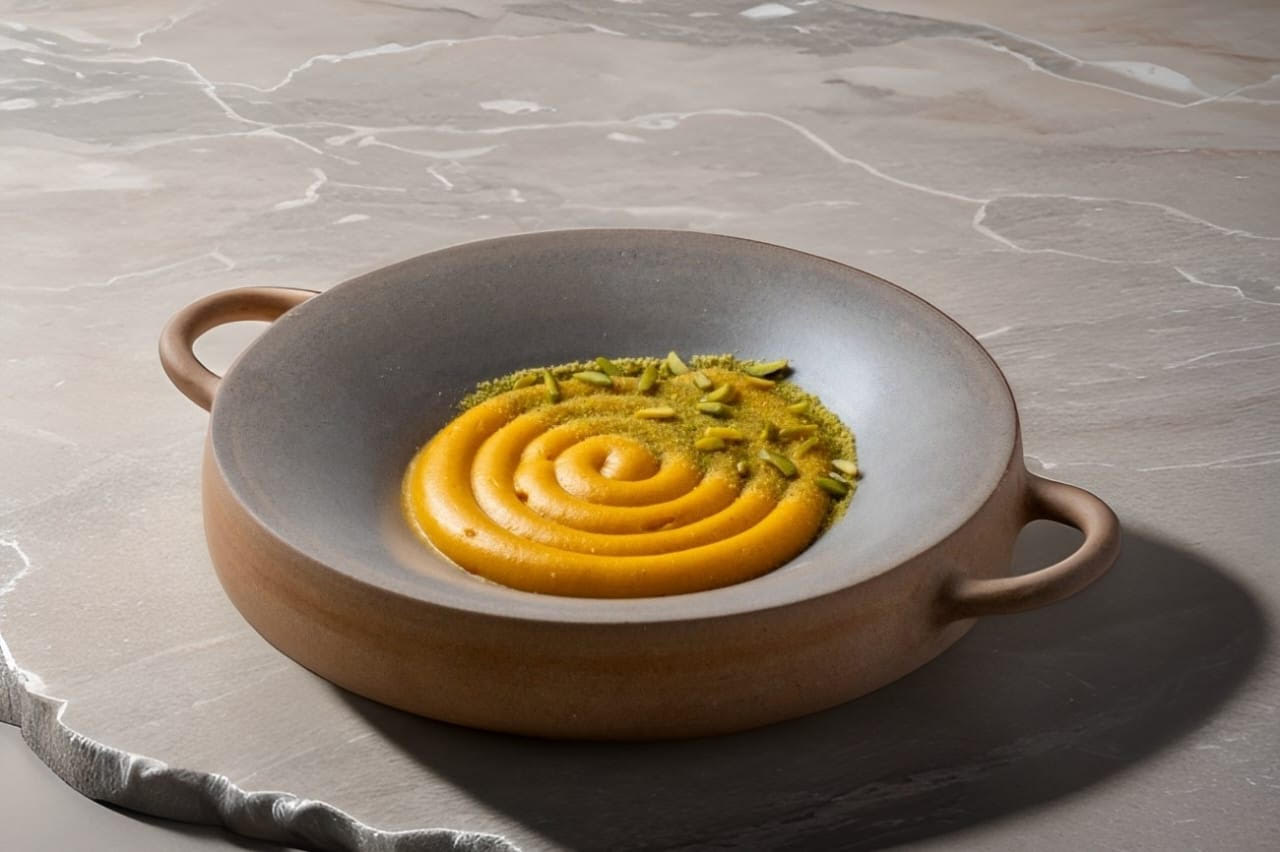
Date Pudding, or 'Majboos' as it's known in Emirati households, represents the heart of Gulf hospitality and culinary heritage. This rich, velvety porridge-like dessert showcases the region's deep connection to dates and dairy, with wheat flour creating a luxurious, almost custard-like texture that melts in the mouth. The golden-brown pudding, infused with cardamom and saffron, sits in a pool of amber-colored ghee and date syrup, creating a striking contrast of colors and flavors. Each spoonful delivers the sweet, honeyed notes of date syrup balanced by the nutty richness of ghee, while cardamom and saffron add aromatic complexity. Traditionally served during Ramadan, weddings, and family gatherings, this dish embodies the Emirati values of generosity and warmth, often presented in small clay vessels called 'dibbs' that enhance its earthy, authentic character.
Nutrition & Info
Instructions
-
1
Bring the water to a boil in a heavy-bottomed pot, then gradually whisk in the wheat flour while stirring constantly to prevent any lumps from forming.
-
2
Continue stirring the mixture over medium heat for about 15 minutes as it thickens into a smooth, dense, pudding-like consistency.
-
3
Add the saffron and cardamom, mix well, then transfer the aseeda to a serving plate and shape into a smooth mound.
-
4
Make a well in the center of the mound and fill it with melted ghee and generous amounts of date syrup, then serve warm with everyone scooping from the communal plate.
Did You Know?
The traditional preparation method involves cooking the pudding in a clay pot called 'dibb' over an open flame, which imparts a subtle smoky flavor that modern cooks often replicate using a slow cooker with clay pot inserts, making it one of the few Emirati desserts where the cooking vessel itself contributes to the final taste profile.
The Story Behind Aseeda bil Tamr
Date Pudding traces its roots to the ancient trading routes of the Arabian Peninsula, where wheat and date cultivation formed the foundation of Bedouin cuisine. The dish evolved from traditional 'kibbeh' preparations, adapting to incorporate the abundant date syrup and ghee that became staples of Gulf cooking. During the 19th century, this dessert became particularly prominent in Dubai and Abu Dhabi households, where it was served during special occasions and religious celebrations, symbolizing prosperity and the region's agricultural abundance.
More Emirati Dishes
 Easy
📜 Story
Easy
📜 Story
Al Harees
Emirati Wheat Porridge
Ramadan iftar, celebrations Easy
📜 Story
Easy
📜 Story
Aseedah
Emirati Flour Pudding
Celebrations, post-birth tradition Easy
📜 Story
Easy
📜 Story
Balaleet
Sweet Vermicelli with Egg Omelette
Breakfast, Eid celebrations Easy
📜 Story
Easy
📜 Story
Batheetha
Date and Flour Sweetmeat
Eid celebrations, guest welcoming
Comments (0)
Log in to leave a comment.
No comments yet. Be the first to share your thoughts!