
Macarons
These ethereal French confections represent the pinnacle of pastry artistry, with their delicate shells yielding slightly to the touch while maintaining perfect crispness. Each macaron features a smooth, creamy ganache filling that creates a delightful contrast between the almond meringue's light texture and the rich chocolatey center. The vibrant rainbow hues showcase the artisanal craftsmanship, with each color carefully selected to complement the flavor profile. Traditionally served during afternoon tea or as elegant dessert accompaniments, macarons embody the refined sophistication of French patisserie. Their delicate nature makes them perfect for savoring slowly, allowing the complex flavors to unfold on the palate. These treats are often enjoyed with a cup of Earl Grey or a glass of champagne, representing the quintessential French approach to dessert as both art and culinary experience.
Nutrition & Info
Instructions
-
1
Sift almond flour and powdered sugar together twice through a fine mesh sieve, discarding any large pieces, to ensure the smoothest possible macaron shells.
-
2
Whip the aged egg whites with a pinch of salt to soft peaks, then slowly add a hot sugar syrup made from granulated sugar and water cooked to 118 degrees Celsius.
-
3
Fold the sifted dry ingredients into the meringue using a technique called macaronage, pressing and folding until the batter flows like lava and forms a ribbon.
-
4
Pipe uniform circles onto parchment-lined baking sheets using a round tip, then firmly tap the sheets on the counter and let them rest for thirty minutes until a dry skin forms.
-
5
Bake at 150 degrees Celsius for fourteen minutes with the oven door slightly cracked, then let cool completely before sandwiching with chocolate ganache made from heated cream and chopped chocolate.
Did You Know?
The French word 'macaron' actually derives from the Italian 'maccherone,' meaning 'dough' or 'paste,' which itself comes from 'macero' meaning 'macerated' or 'softened,' referring to the soft, macerated texture of the almond paste used in the original recipe.
The Story Behind Macarons
Originating in France during the 16th century, macarons were initially created as royal confections for the French court. The modern macaron as we know it today was perfected in the 19th century by French pastry chefs, particularly in the renowned patisseries of Paris. These delicate cookies became symbols of French culinary excellence and are deeply embedded in French cultural identity, representing the country's commitment to artisanal craftsmanship and refined taste.
More French Dishes
 Medium
📜 Story
Medium
📜 Story
Blanquette de Veau
Veal in White Sauce
Weekday family dinner Medium
📜 Story
Medium
📜 Story
Boeuf Bourguignon
Burgundy Beef Stew
Sunday lunch or dinner Hard
📜 Story
Hard
📜 Story
Bouillabaisse
Bouillabaisse
A lunch dish in Marseille, traditionally eaten near the port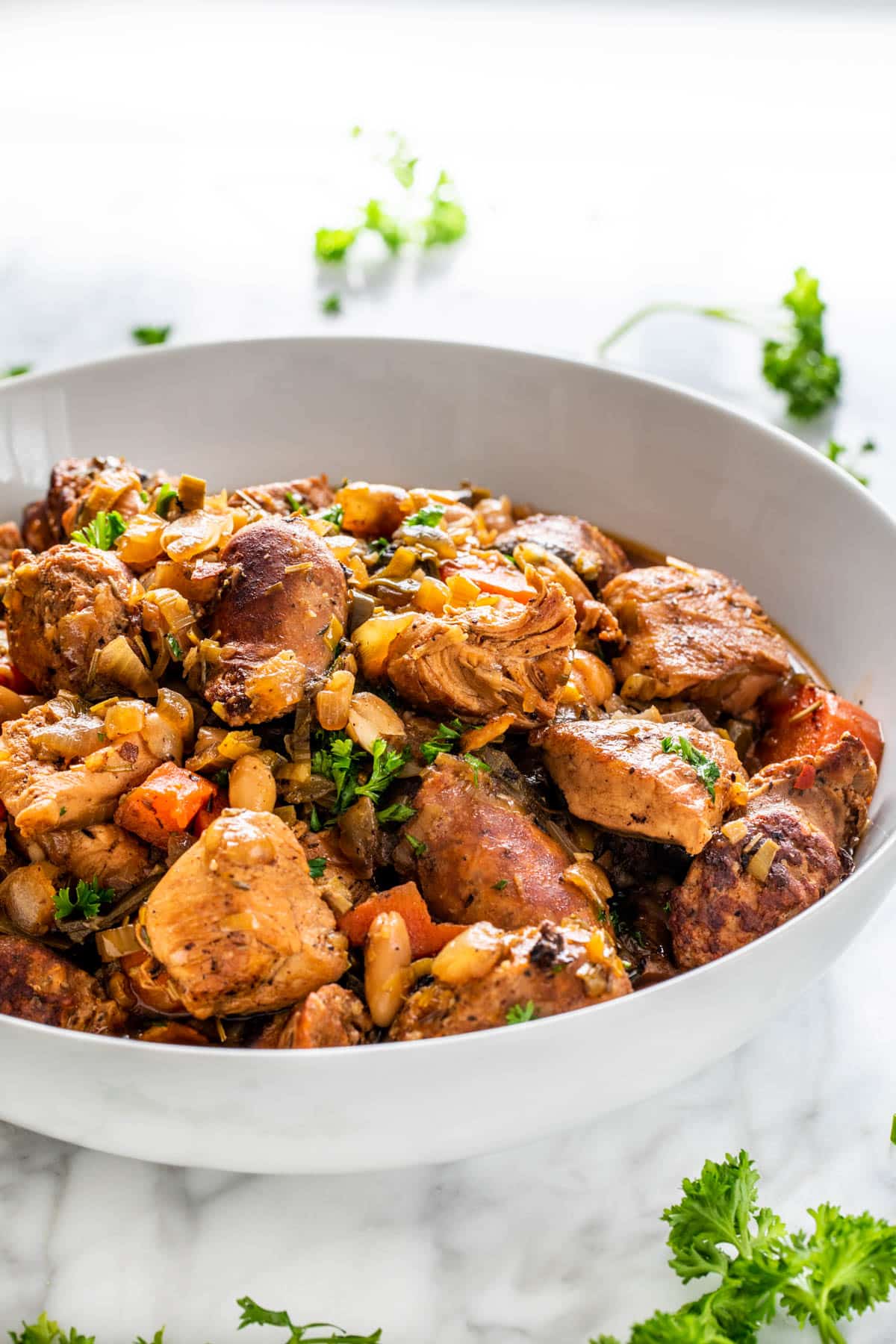 Hard
📜 Story
Hard
📜 Story
Cassoulet
Cassoulet
Winter lunch or dinner
Comments (0)
Log in to leave a comment.
No comments yet. Be the first to share your thoughts!