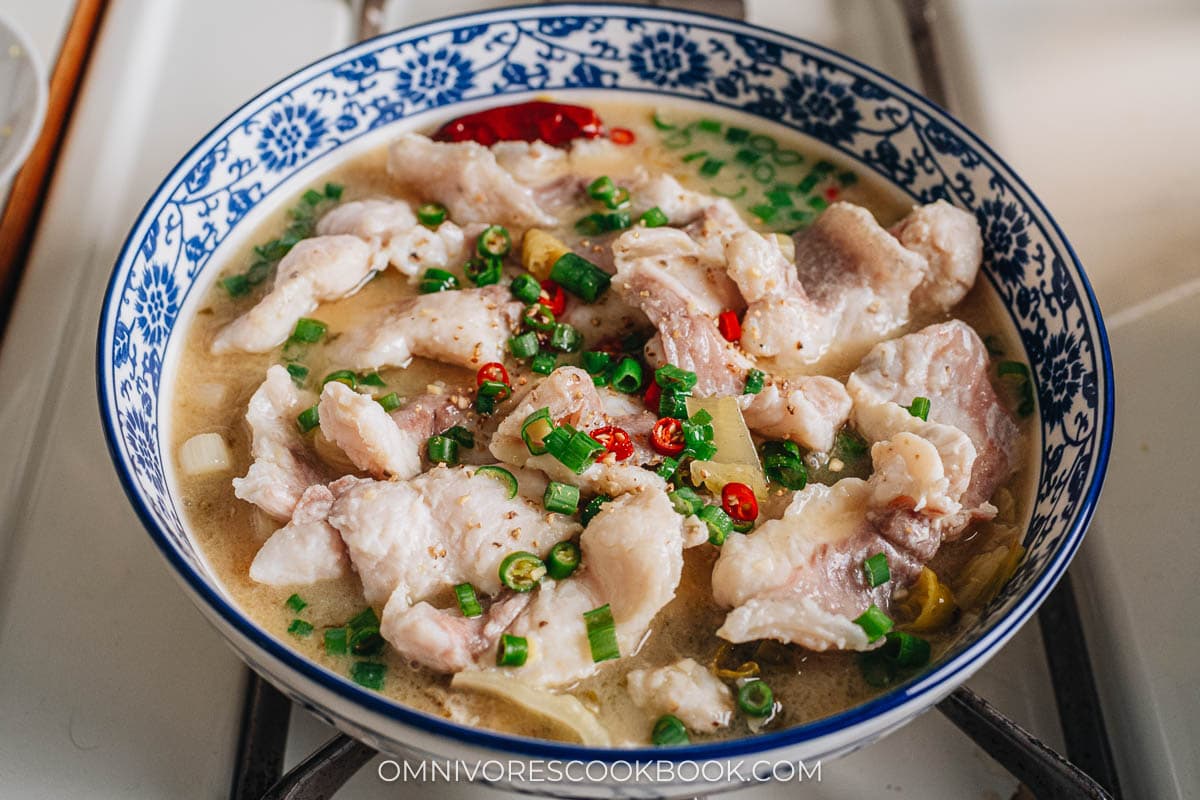
Sichuan Pickled Cabbage Fish embodies the bold, complex flavors that define Sichuan cuisine's legendary 'mala' (numbing and spicy) sensation. This vibrant dish features tender fish fillets poached in a luminous, amber broth that dances with the bright acidity of pickled mustard greens, the deep heat of dried chilies, and the distinctive citrusy warmth of Sichuan peppercorns that create that signature numbing sensation. The fish remains incredibly moist and flaky, while the broth coats the palate with layers of sour, spicy, and umami flavors. Traditionally served in family-style portions during winter months, this dish represents the Sichuanese philosophy of balancing contrasting elements - the cooling fish against the fiery broth, the sour pickled vegetables against the rich stock. The dish's rustic appearance, with its bright green pickled cabbage and golden fish, reflects the agricultural heritage of Sichuan's fertile valleys.
Nutrition & Info
Allergen Warnings
Equipment Needed
Instructions
-
1
Slice fish thinly and marinate with egg white, cornstarch, and salt.
-
2
Stir-fry pickled mustard greens with garlic, ginger, and dried chilies.
-
3
Add stock and bring to a boil, simmer ten minutes for flavor.
-
4
Gently slide fish slices into the simmering broth.
-
5
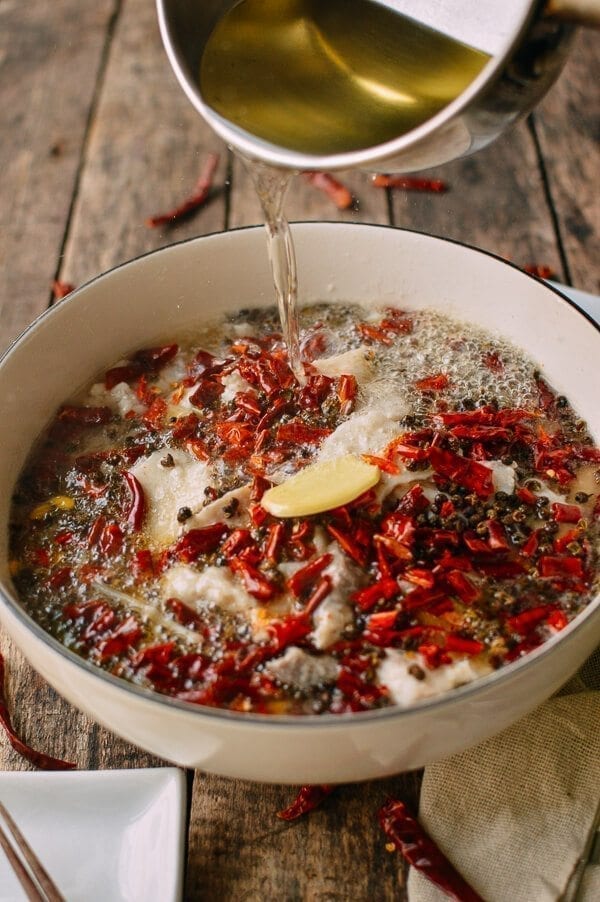
Cook two minutes until fish is just done, pour into a bowl and top with hot peppercorn oil.
Did You Know?
The dish's name literally translates to 'Fish in Pickled Cabbage Soup,' but the traditional preparation method involves first cooking the fish in a separate broth before adding the pickled cabbage, creating a two-stage cooking process that allows each ingredient to maintain its distinct character while harmonizing into a complex flavor profile.
Chef's Notes
Equipment Tips
- wok
The Story Behind 酸菜鱼 (Suan Cai Yu)
Originating in Chengdu during the Qing Dynasty, this dish emerged from the resourceful cooking traditions of Sichuan's farmers who preserved vegetables through pickling to survive harsh winters. The combination of fish and pickled vegetables reflects the region's agricultural abundance and the historical importance of fermentation in Chinese cuisine. This dish gained prominence in the 19th century as Sichuan's culinary traditions spread throughout China, becoming a symbol of the region's bold flavor profile that distinguishes it from other Chinese cuisines.

Comments (0)
Log in to leave a comment.
No comments yet. Be the first to share your thoughts!