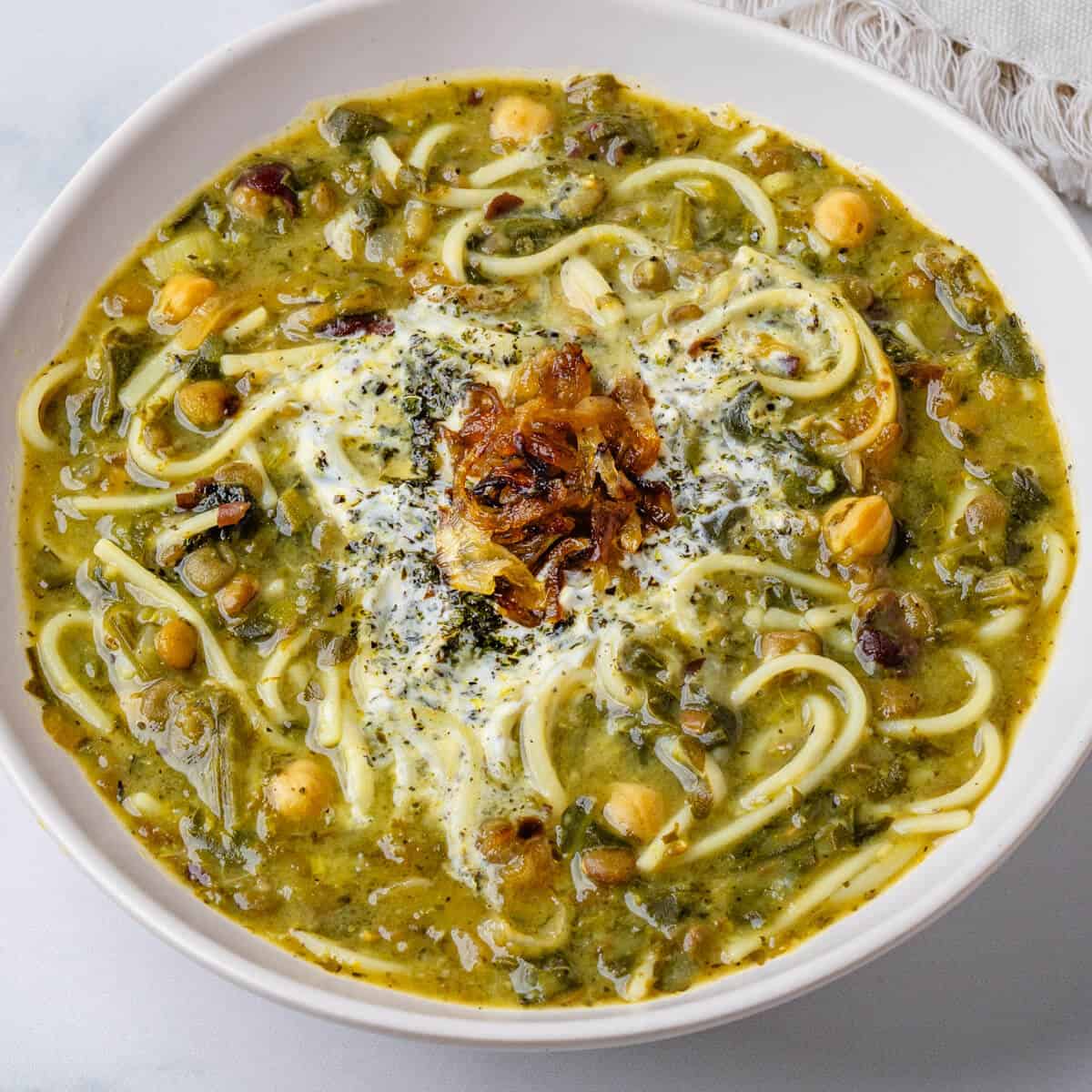
New Year Noodle Soup, or Ash-e Reshteh, embodies the vibrant spirit of Nowruz, Iran's ancient New Year celebration. This rich, velvety soup features delicate reshteh noodles swimming in a savory broth infused with turmeric and aromatic spices. The hearty combination of chickpeas, lentils, and kidney beans creates layers of texture while fresh herbs - parsley, cilantro, dill, and spinach - provide bright, earthy notes. Each bowl is crowned with creamy kashk, crispy fried mint, and sweet caramelized onions that add contrasting textures and deep flavor. The soup's golden hue reflects the hope for prosperity, while its seven ingredients symbolize the seven creations of Ahura Mazda. Traditionally served in wide, shallow bowls during Nowruz gatherings, it brings families together as they share this sacred meal, marking the rebirth of nature and the triumph of good over evil.
Nutrition & Info
Instructions
-
1
Cook the soaked chickpeas and kidney beans in a large pot of water for about 45 minutes until almost tender, then add the lentils and continue cooking for 20 more minutes.
-
2
Add all the chopped fresh herbs and spinach to the pot and simmer for another 15 minutes until the greens are wilted and the soup is thick and rich.
-
3
Add the reshteh noodles to the soup and cook for 10 minutes until tender, stirring gently to prevent them from sticking together.
-
4
In a small pan, fry diced onions until caramelized and crispy, and in another pan, fry dried mint in oil until fragrant, then serve the soup topped with kashk, fried onions, and mint oil.
Did You Know?
The seven ingredients in Ash-e Reshteh are not merely symbolic - they were traditionally prepared by the eldest family member, who would place each ingredient into the soup while reciting prayers for the coming year, making the preparation itself a form of spiritual meditation that connects the family to their ancestral wisdom.
The Story Behind Ash Reshteh Norouz
Ash-e Reshteh traces its origins to ancient Persian Zoroastrian traditions, where the seven ingredients represent the seven sacred creations of Ahura Mazda. The dish evolved from ancient grain-based soups and was influenced by the Islamic conquest of Persia, incorporating new ingredients while maintaining its core symbolism. During the Safavid dynasty, it became firmly established as a Nowruz centerpiece, with families gathering to prepare it together, passing down recipes through generations as a way to honor both culinary heritage and spiritual beliefs.

Comments (0)
Log in to leave a comment.
No comments yet. Be the first to share your thoughts!