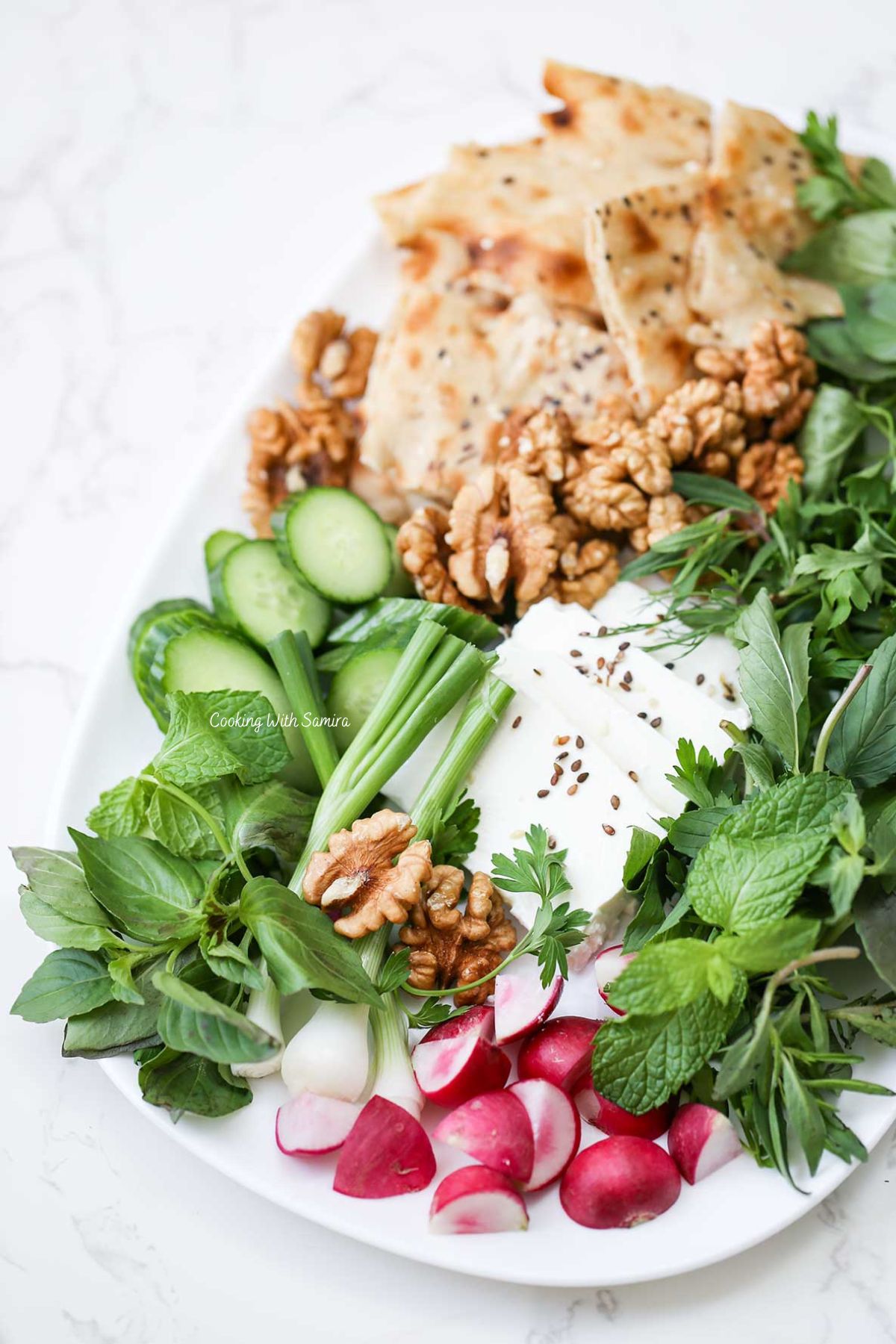
The Persian Herb Platter, or 'Khoresht-e Sabzi,' represents the very soul of Iranian hospitality and culinary philosophy. This vibrant medley of fresh herbs - tender basil, aromatic mint, pungent tarragon, and bright cilantro - creates a symphony of colors and flavors that dance on the palate. The crisp radishes add a satisfying crunch, while the creamy feta cheese provides rich, salty contrast to the herbaceous brightness. Toasted walnuts contribute nutty depth and textural contrast, all served alongside warm, soft sangak bread that absorbs the fresh flavors perfectly. Traditionally presented at the beginning of every Iranian meal, this platter embodies the Persian concept of 'goosht-e sabzi' - the harmony of herbs and meat - and serves as a bridge between the sacred and the everyday, bringing families together around the table.
Nutrition & Info
Instructions
-
1
Wash all the fresh herbs thoroughly in cold water and gently pat dry, keeping the stems intact for easy picking.
-
2
Arrange the herbs, radishes, and scallions beautifully on a large platter, grouping each herb type together.
-
3
Place the cubed feta cheese and walnuts in small bowls or scatter them around the herb platter.
-
4
Serve alongside warm sangak or lavash bread, encouraging everyone to wrap herbs, cheese, and walnuts in bread and eat with each bite of the main meal.
Did You Know?
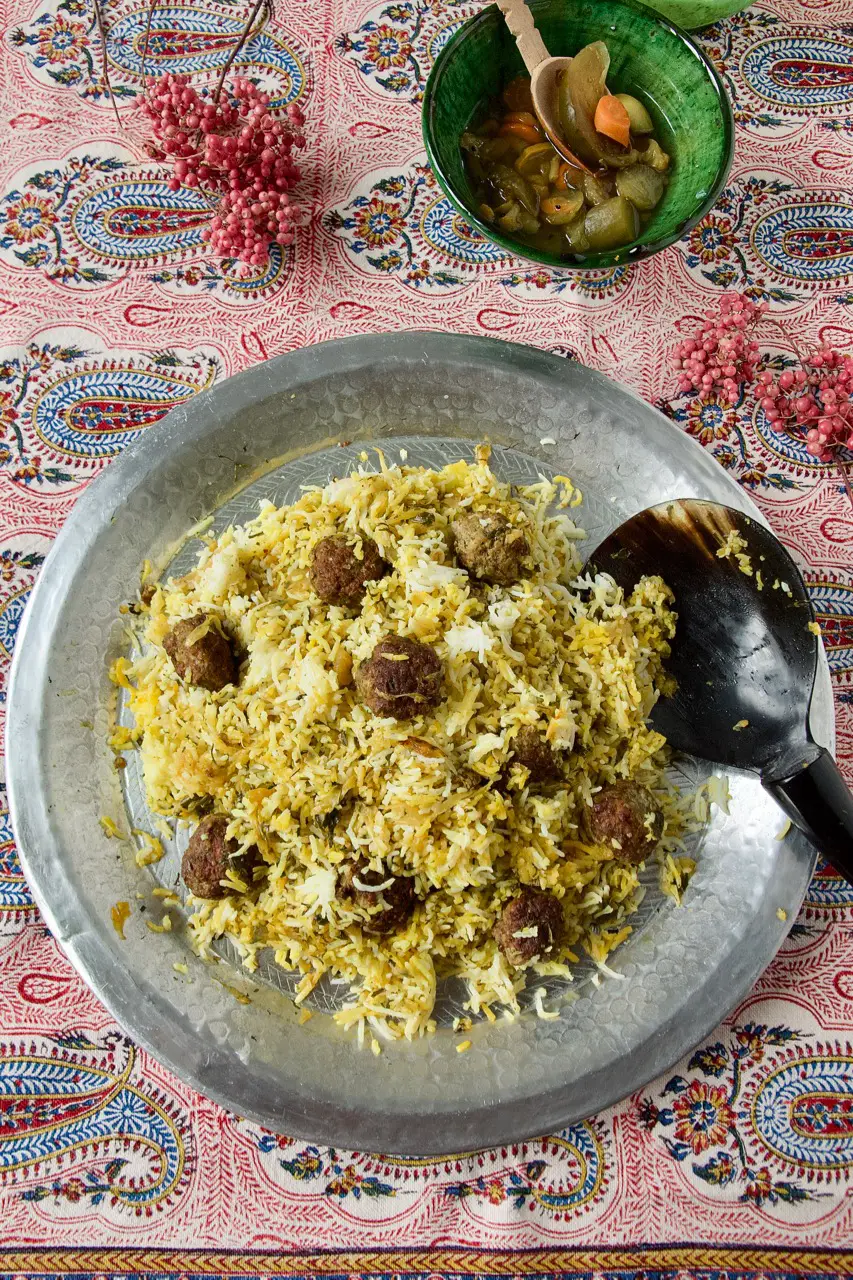
The Persian Herb Platter is traditionally served on a special silver platter called a 'dastarkhane,' which is believed to bring good fortune to the household, and the act of sharing this platter is considered so auspicious that it's said to prevent the 'evil eye' from affecting the family.
The Story Behind Sabzi Khordan
The Persian Herb Platter has ancient roots dating back to the Zoroastrian era, when fresh herbs were considered sacred and symbolic of life's renewal. This dish evolved from the traditional 'khoresht-e sabzi' - herb-based stews that were central to Persian cuisine, representing the country's agricultural abundance and seasonal bounty. The platter format emerged during the Safavid period as a refined way to showcase the Persian love for fresh ingredients and the concept of 'goosht-e sabzi' - the harmony between herbs and meat.
Comments (0)
Log in to leave a comment.
No comments yet. Be the first to share your thoughts!